


Spider Pest Control in Phoenix, Arizona






INSECTEK PEST SOLUTIONS
Spider Control Services
Insectek protects local homes and businesses from spider infestations and we can exterminate spider infestations same-day in most cases. If you just want to get rid of spiders in your home, or have seen dangerous Arizona spiders like Brown Recluse and Black Widow spiders, Insectek can help. Call us now for a FREE pest control quote.

Trusted Local Spider Pest Control Company
Insectek’s friendly and knowledgeable staff have garnered us numerous awards and accommodations. Our neighbors have voted us best pest control company years-over because we take care of our customers and their properties. See why our customers love us!
We Offer Spider Pest Control Services Valley-Wide
We Cover All Your SPider & Pest Needs
Spider Inspection
Spider Inspector – Our technicians start by inspecting homes and businesses to find where spiders are living in your home / business, or where they are gaining entry indoors. We then identify the types of spiders we need to get rid of, ensuring we use spider pest control products that target the exact spider types you want out of your home.
Signs of Spiders & Spider Damage
Signs of Spider Damage – cobwebs, dead flies and other bugs are the most common signs that you have spiders. While spiders don’t cause a lot of damage, they do like to snuggle up behind beds and mattresses and be in places you would rather not have them. When spiders are biting, coming into common areas or becoming more of a nuisance, Insectek gets rid of them.
Common Arizona Spiders – We Can Treat Them All
- Brown Recluse
- Black Widow
- Wolf Spiders
- Grass Spiders
- Cellar Spiders
- Jumping Spiders
- Common House Spiders
- Tarantulas
- Arizona Brown Spiders
- Everything else with 8 legs…
Be sure to read our Homeowner Pest Control Guide here.
What Does a Spider Bite Look Like?
You most likely will never see a spider bite you, but you will feel it later. Spider bites just show up and start itching and hurting.
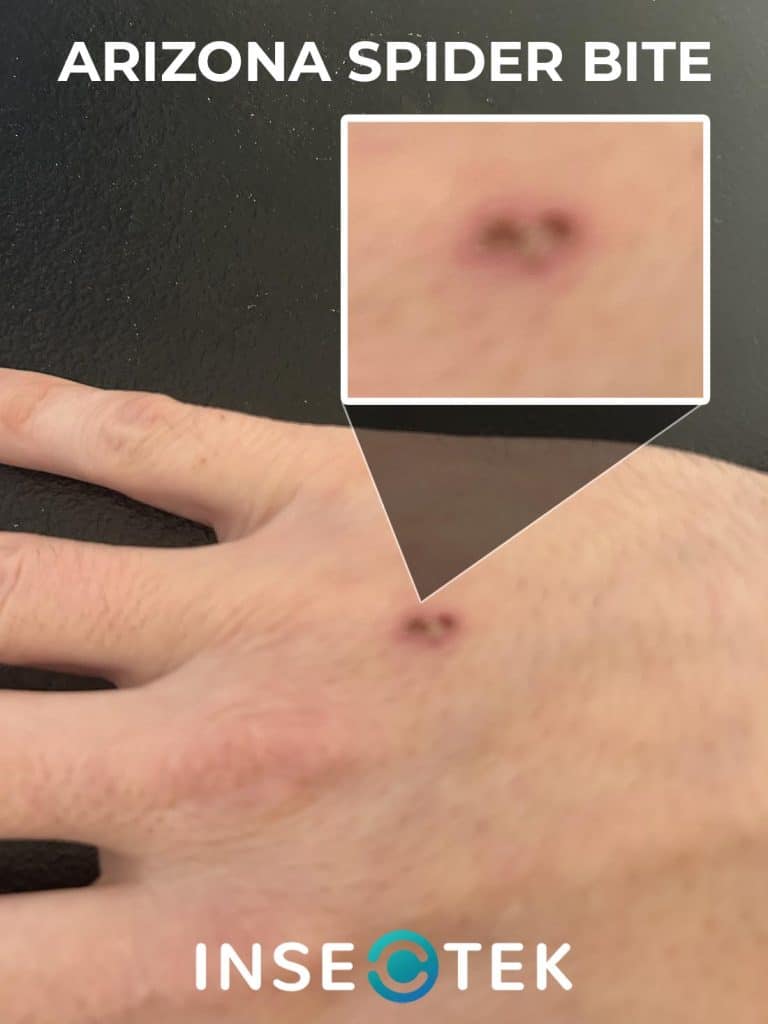
If you get bit by an Arizona spider, it will look like two holes (in most cases) with pronounced red circles around them. There also may be evidence of necrosis or yellowing of the skin with fluid. Most spiders’ bites are not highly venomous, but Black Widow and Brown Recluse spider bites in Arizona can be dangerous or deadly – especially for those old/young or with a compromised immune system.
INSECTEK | FAMILY OWNED LOCAL PEST CONTROL COMPANY
Spider Exterminator Services
How to Kill Spiders – The best way to control spiders is to control their breeding cycles through preventative spider control maintenance. We offer monthly, quarterly, and annual appointments for spider control that start at just $44 per month.
Monthly Pest Management For Spiders
Monthly preventative maintenance is the perfect way to ensure that you never have to see a spider. Monthly plans keep even the most stubborn pest problems at-bay. Call us today to get a free quote for ongoing maintenance plants that start at $44/month.


Spider Treatment Cost
STARTING AT JUST:
$44/mo
Spider Service – How much does it cost to get rid of spiders in Phoenix? With Insectek, its just $44 per month to get started with preventative maintenance that will control spiders and exterminate spider infestations. Call us today for a free quote to get started.
Why Choose Insectek
Organic Exterminator Products
Spider Companies using organic pest control products are always recommended as your best defense against spiders. Organic chemicals – used in smaller amounts throughout the year – allows for naturally-derived chemicals to be used for pest control. This is a safer alternative to harsh pesticides.
Spider Control That Is Safe For Pets
Organic spider sprays are safe for pets and safe for use around kids rooms and play areas. We offer organic spider pest control for both residential and commercial properties in the Phoenix area, and our services are highly affordable.
Prevent Spiders Before They Appear and Start to Bite!
Call us today for residential and commercial SPIDER services
Arizona Spider Information & Resources
Spiders In Arizona
Brown Recluse
The brown recluse is most commonly found in the southern and central states. Unlike other spiders, the brown recluse doesn’t spin a web and prefers to live in snug and dark places like a pile of firewood or a cardboard box.
They’re infamous for their venomous bite that destroys blood vessels, nerves, and skin tissue. The longer a brown recluse hangs out in your home, the more time they have to lay eggs and increase their population. Due to their venom posing a danger to both people and pets, it’s good to get rid of a brown recluse if you spot it.
Black Widow
Black widows are, unfortunately, very common in Arizona. Like a brown recluse, a bite from a black widow can cause serious harm to the nervous system. It’s recommended that you seek medical attention after being bitten by one of these girls – yes, only the female bites. Male black widows are harmless and can be differentiated from females by their lack of red hourglass markings.
Black widows prefer tight, dry, and dimly lit environments and are prone to bite if you accidentally press your skin up against one in your bed, on a couch, or when putting your shoes on.
Wolf Spider
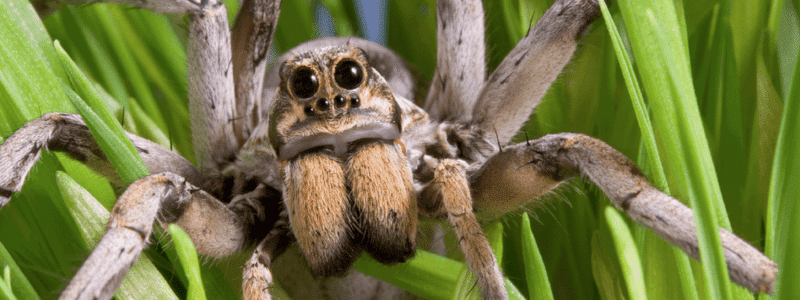
Like the black widow, wolf spiders are venomous and common in Arizona but aren’t necessarily dangerous to humans.
These fuzzy insects got their name because of their similar hunting patterns to wolf packs. They tend to avoid people but will bite if they feel threatened or you accidentally come into contact with one. A bite from a wolf spider can cause an allergic reaction and is comparable to the pain and danger of a bee sting.
Spotting a wolf spider in the home can point to a greater infestation issue as they are commonly lured by their food supply of smaller insects.
Tarantula
Tarantulas are big, hairy spiders and a prime example of a species that appears more frightening than it is dangerous. Typically found in arid landscapes, they pose little threat to humans. While their bite may cause some discomfort and swelling, their venom is harmless to humans.
Grass Spiders
Grass spiders are overall harmless to humans and are usually identified by their large sheet-like webs which funnel over low grass or shrubs. They like to hang out in grassy lawns and search for insects to eat.
Grass spiders are often mistaken for wolf spiders due to their coloring. They have long legs with brown and white bodies and typically live outdoors. However, they occasionally find their way into garages, woodpiles, and clutter.
Jumping Spiders
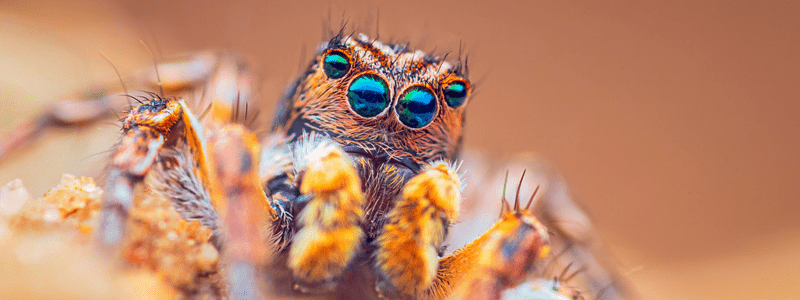
These are characterized by their large set of eyes in the front of their body. Jumping spiders have compact bodies with shorter legs. While they tend to be black, jumping spiders can be brown or gray with bright coloration markings. These markings can come in gray, yellow, red, blue, green, or white spots as well as stripes.
Jumping spiders don’t build webs and only bite in self-defense. They’re less likely to be seen in the home but may be found around your lawn and yard, hiding in bushes. Overall, they’re harmless and can be left alone to prey on insects outside the home.
American House Spider
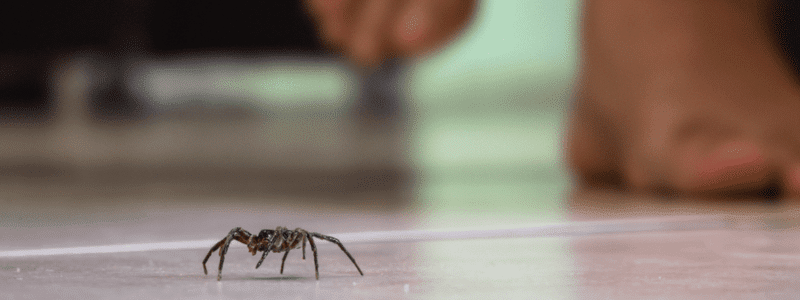
House spiders are mostly grey and compact, about the size of a nickel (6 to 9 mm in diameter). They’re typically harmless and prefer to hide in cracks and crevices in your home. They’re the most commonly seen spiders in houses, coining them such a general title.
House spiders are found all over the states and fall under other names such as cobweb spiders and domestic house spiders. Unlike other species, American house spiders aren’t poisonous, and their bite is likely to cause short-term pain.
Arizona Brown Spider
The Arizona brown spider is primarily found in Arizona, as its name suggests. Due to their appearance, the Arizona brown spider is often mistaken for brown and desert recluses. They have three sets of eyes, yellowish to light brown bodies, and are typically 0.83 cm (0.33 in).
They have markings that resemble the shape of a violin, which gives the nickname “violin” or “fiddle” spider. While they are less harmful than other species, Arizona brown spiders are still venomous and their bites can cause painful symptoms.
Cellar Spiders
Cellar Spiders have a light tan coloring and long legs, commonly mistaken for daddy long legs. They’re extremely common household pests, preferring basements, as their name suggests. They like cool spots underground and can typically be found hanging upside down. Cellar spiders are slow, clumsy, and will shake if their web is approached. Despite their behavior, they are harmless to people.
Are Spiders Harmful?
Almost all spiders are venomous, but not all of them are deadly. The bites of most spiders found in Arizona cause only mild reactions. The exceptions are bites from black widow and brown recluse spiders, which can be fatal to humans. If you suspect a black widow or a brown recluse has bitten you, seek medical attention immediately.
Why Are Spiders Around Your Home?
- A good food source might lead spiders into your home. They enjoy common household pests such as roaches, mosquitoes, and flies.
- Spiders enter through windows, doors, and cracks or gaps in your foundation.
- Weather conditions can drive spiders inside. They’ll seek shelter from the rain and extreme temperatures.
- Leaves, woodpiles, and other clutter outside of your home can serve as a staging ground, providing easy access for spiders to come inside.
Helpful Information About Termites
Frequently Asked Questions
Arizona is home to 27 species of spider. Every home will house a spider at some point, with different species preferring certain landscapes, temperatures, and hiding spots. Not all spiders are dangerous, although it’s important to know which ones are. In some cases, spiders can be good to keep around the home as they can limit the population of more destructive pests.
• Webs in and around the home
• Eggs sacs
• Spider droppings
• Seeing multiple spiders in the home
• Excess flying pests
• Finding bites on the body
• Vacuum webs, spiders, egg sacs and dead insects
• Use sticky traps
• Remove moisture and clutter
• Seal and cracks in the foundation
• Schedule regular integrated pest management with a professional exterminator
Spider eggs sacs are small white or light-colored spheres that look like golf balls or grapes. They’re typically wrapped inside a silk sac to help incubate the offspring. Spiders usually lay egg sacs in their webs hidden in corners of the home and within cluttered spaces.
• Vacuum frequently to get rid of cobwebs and dead insects
• Get rid of built of moisture and open water sources
• Extermination of existing pest problems
• Remove clutter that can be used as a hiding spot
• Maintain the yard
• Seal openings and cracks
• Schedule regular integrated pest management with a professional exterminator
Resources
Related Articles
-
Are Jumping Spiders Poisonous?
In this blog, we’ll focus on the jumping spider, whether it has poisonous properties, and its qualities, including:…
-
Are Wolf Spiders Dangerous?
Even if you know about wolf spiders in Arizona and other similar desert climates, learning about them is…
-
Common House Spiders to Know & When You Need Pest Control
Here’s a guide to the most common household spiders and preventative measures for staving off potential infestations. In…


Get Started
Request Your Free Instant Quote
Receive an instant pest removal and pest control quote now!