Fire ants are common throughout the United States, but Arizona’s warm, dry climate provides the perfect conditions for fire ant colonies to thrive. However, an infestation in your home or garden can be particularly harmful as some people are severely allergic.
Fire ants are a highly aggressive species and swarm when disturbed, which leads to multiple bites and severe health risks for those who are allergic. It’s important to eradicate these infestations before they become a bigger issue.
How to Identify a Fire Ant Infestation
Identifying fire ants is easy if you know what to look for.
Fire ant identifiers:
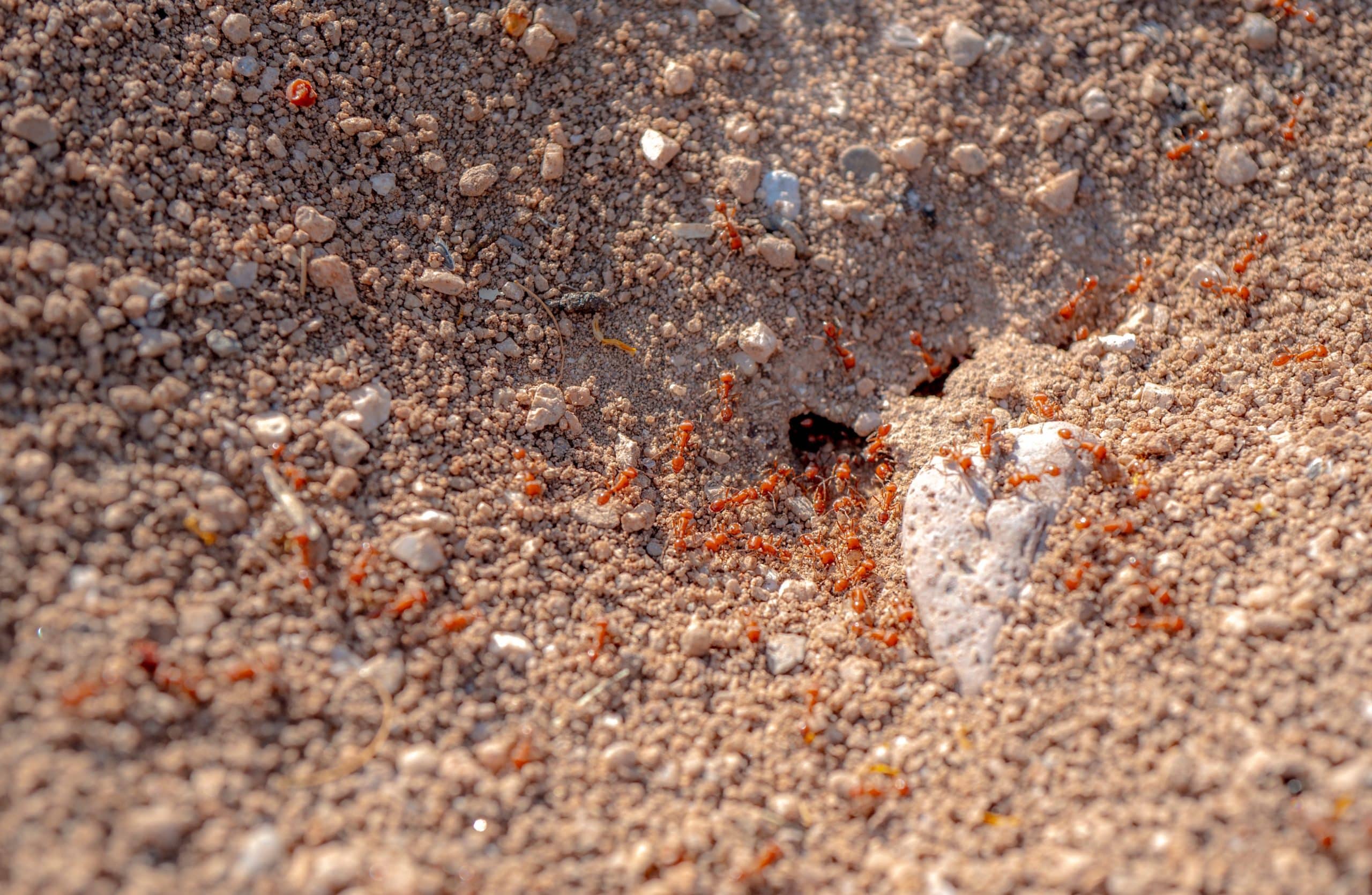
- Mounds: Fire ant mounds will have a fluffy appearance and are often found after rain. A key distinguishing feature of fire ant mounds is the lack of a central opening, as they use underground tunnels.
- Behavior: When their mounds are disturbed, fire ants will form aggressive swarms and attack as a collective force. Unlike other ants, these are persistent in their attacks and often leave multiple stings.
- Stings: Fire ant stings will form a white, liquid-filled pustule after 1-2 days. This is unique to the species and won’t be found with common ant stings.
- Appearance: The reddish-brown bodies of fire ants earn them their name. Workers can vary in size, ranging from 2 to 6 millimeters long.
Why Fire Ants Invade Gardens
There are a few key factors that will draw fire ants to a vegetable garden. Between food, water, and nesting site locations, gardens are the ideal habitat for fire ants. However, a fire ant infestation is the last thing you want while tending to a garden.
Fire ants are drawn to:
- Moist, warm soil or mulch
- Abundant food sources
- Loose soil for building mounds
- Protection offered by raised beds or deep soil
While common ants manage insects and waste in a garden, fire ants cause damage to plants and cause painful stings that can result in severe allergic reactions. It is best to take immediate action and remove these pests from your garden.
DIY Methods to Kill Fire Ants in a Garden
There are a few at-home fire ant treatments that can kill fire ants in your garden. While they may work for some, more severe infestations will require professional aid.
Common DIY methods include:
- Drenching mounds with orange oil and soap
- Drenching mounds in boiling water
- Molasses barriers
- Diatomaceous Earth around the mounds
While natural methods have been known to work, they don’t always kill the queen. In this case, treatment is unsuccessful, and the colony will reappear. At-home methods can kill worker ants, but rarely reach the queen far underground.
The most effective DIY method is bait treatment, which makes it possible to kill the queen when workers bring the toxic bait into the mound.
Why Fire Ant Infestations Keep Coming Back
The answer is simple: you need treatment that kills the queen.
Fire ants rarely build just one mound, often creating a network of “satellite” mounds they can migrate to when they sense a threat to the colony. If the queen isn’t killed in the initial treatment, she will continue to lay thousands of eggs, and the colony will move to a new nest. This is why individual mound treatments are ineffective.
Even if you successfully kill one colony, leftover pheromone trails can guide a new colony to your garden. You will want to monitor your garden for new activity, as well as any other areas previously infested with fire ants.
Professional Fire Ant Treatment for Gardens
When DIY methods fail, professional fire ant treatment is the next step. These services can consist of bait and mound treatments, as well as organic options to preserve your garden’s environment.
One popular fire ant treatment used by pest control professionals is the two-step method. This is conducted by first broadcasting bait over the affected area to kill the queen, then spot-treating any remaining active mounds with insecticide.
These professional-grade treatments are highly effective as they kill the queen and eradicate the colony quickly.
How Long It Takes to Eliminate Fire Ants
Eliminating a fire ant colony isn’t an overnight endeavor. This process can take weeks, if not months. This is due to the queen’s deep placement underground and ability to repopulate a colony within days.
Depending on what you use, the timeline can vary. Fast-acting bait works quickly, with results after 1-4 weeks. Slow-acting treatments such as insect growth regulators can take months to eradicate the colony, but are highly effective as they inhibit the queen from laying more eggs.
Several outside factors can impact the treatment timeline:
- Rain, which ruins bait
- Colony size
- Inactive seasons
How to Prevent Fire Ants from Returning to Your Garden
Once you have fully eradicated a fire ant colony, you will need to take preventative measures to avoid repopulation. Thankfully, there are a few simple things you can do to make your garden less appealing to these pests.
Prevention techniques:
- Clear rotten logs or debris from your yard or garden.
- Avoid overwatering.
- Use preventative baiting twice a year.
- Mow grass regularly.
- Plant herbs like mint and lavender to naturally repel ants.
Expert Fire Ant Control Services in Arizona with Insectek
At Insectek, we understand how Arizona’s climate attracts all kinds of ants, including fire ants. We use targeted treatment to kill fire ant colonies and instate preventative measures to ensure a pest-free home and garden.
Our organic chemicals are safe for families, pets, and garden plants. If you are ready to tackle your fire ant infestation, call today and receive a free quote!