How to Identify Them, Why It Matters, and What to Do About Each
If you’ve spotted red-colored ants around your home or yard, you’re not alone, and you’re right to ask an important question: Are these red ants or fire ants? While the two are often confused, they’re not the same, and treating them incorrectly can make the problem worse.
This guide breaks down the key differences between red ants and fire ants, how to identify each, the risks they pose, and the best way to eliminate them safely and effectively.
Are Red Ants Fire Ants?
No. Fire ants are a specific species, while “red ants” is a general term people use to describe several ant species that appear reddish in color.
Here’s the important takeaway:
- All fire ants are red ants
- Not all red ants are fire ants
That distinction matters – especially when bites, stings, and infestations are involved.
What Are Red Ants?
“Red ants” is a broad label commonly used for ants that have a reddish or reddish-brown appearance.
In Arizona, this may include:
- Harvester ants
- Pavement ants
- Field ants
Common Traits of Red Ants
- Color: Light red to dark brown
- Behavior: Usually non-aggressive
- Nesting: Soil, cracks in pavement, under rocks
- Bites: Rare and mild
- Primary concern: Nuisance infestations, not danger
Most red ants do not sting and are more interested in food crumbs, seeds, or moisture than in attacking people.
Fire Ants vs. Red Ants
Fire ants are a highly aggressive species known for their painful stings and rapid colony growth.
Fire Ant Characteristics
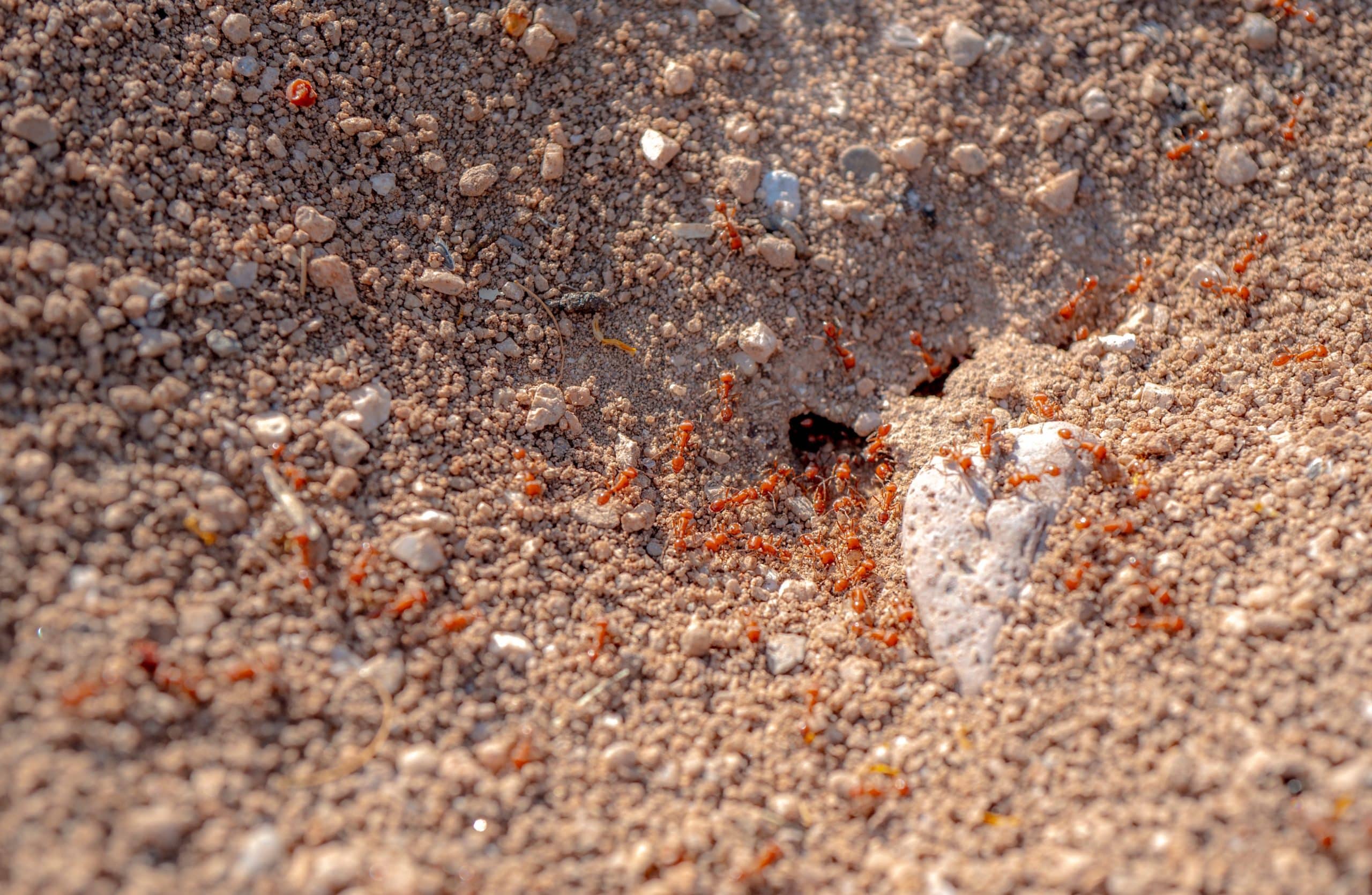
- Color: Reddish-brown with darker abdomens
- Behavior: Extremely aggressive when disturbed
- Nesting: Large dirt mounds in lawns, landscaping, and open soil
- Stings: Yes – multiple, painful, burning stings
- Primary concern: Human injury, pet injury, property use limitations
Fire ants don’t just bite once. They attack in groups, delivering repeated stings that inject venom.
| Feature | Red Ants | Fire Ants |
| Aggression | Low | High |
| Sting | Rare or none | Yes |
| Pain Level | Minimal | Intense burning |
| Nest Size | Small to moderate | Large mounds |
| Threat to Pets & Kids | Low | High |
| DIY Control Success | Often effective | Frequently fails |
How to Identify Fire Ants in Your Home
You’re likely dealing with fire ants if you notice:
- Raised dirt mounds with no visible hole
- Ants swarming aggressively when disturbed
- Painful stings that form white pustules
- Multiple ants attacking at once
- Activity near lawns, sprinkler systems, or walkways
If ants rush out immediately and climb upward, it’s a strong indicator of fire ants, not typical red ants.
Why Fire Ants Are More Dangerous
Fire ant stings can cause:
- Severe burning pain
- Swelling and redness
- White pus-filled blisters
- Secondary infections from scratching
- Allergic reactions, including anaphylaxis in rare cases
Children, seniors, pets, and anyone with allergies face higher risks from fire ant infestations.
How to Get Rid of Fire Ants vs. Red Ants
Red Ant Control
- Baits and perimeter sprays often work
- Colonies are smaller and easier to eliminate
- DIY methods may be sufficient
Fire Ant Control
- Requires colony-level treatment
- Surface sprays only scatter ants
- Improper treatment can cause colonies to split and spread
- Professional integrated pest management is strongly recommended
Fire ants are notoriously resilient. Killing visible ants does not eliminate the queen or the infestation.
Why Fire Ants Keep Returning to Yards
Fire ants thrive in:
- Overwatered lawns
- Irrigated landscaping
- Newly disturbed soil
- Warm Arizona climates
Without professional control, colonies can rebound quickly—even after DIY treatments appear successful.
When to Call a Professional for Ant Control
You should consider professional pest control if:
- You’re unsure whether ants are fire ants
- You’ve experienced painful stings
- Ant mounds keep reappearing
- Pets or children are at risk
Accurate identification is the first step toward lasting control.
Red Ant or Fire Ant Treatment with Insectek
Not all red ants are dangerous – but fire ants are a serious problem that shouldn’t be ignored. Knowing the difference protects your family, pets, and property from unnecessary pain and repeat infestations.
If you suspect fire ants or want long-term prevention, Insectek can save you time, frustration, and future stings.